What Is the Meaning of the Anion Gap?
The anion gap is a test-derived value that helps doctors assess electrolytes and spot an acid-base abnormality. It is calculated from common blood chemistry results, especially sodium, chloride, and bicarbonate. Because it reflects the balance of measured ions in the blood, the anion gap can act as a useful diagnostic clue during metabolic acidosis evaluation.
In simple terms, the anion gap balances the positively charged ions and negatively charged ions reported on an electrolyte panel. Most commonly, the calculation uses serum sodium as the main measured cation, then deducts serum chloride and serum bicarbonate. The resulting anion gap result helps differentiate between different causes of acidosis and guides further lab interpretation.
An anion gap calculator speeds up this process by applying the standard equation automatically. That is helpful because the value itself is only part of the picture; the real value comes from understanding what the number indicates about electrolyte balance and the likely cause of the patient’s symptoms or test result.
Anion Gap Equation & Calculator Inputs
The usual anion gap formula reads:
Anion gap = sodium - (chloride + bicarbonate)
Many formula calculator tools require three inputs: sodium, chloride, and bicarbonate. These results often come from a standard blood panel or related blood test. When added, the calculator provides the anion gap and helps guide a more informed clinical assessment.
Certain systems may include potassium in a different version of the equation, but the most widely used bedside and online approach relies on sodium, chloride, and bicarbonate. This makes the calculation practical for fast blood chemistry review and routine lab interpretation.
To use an anion gap calculator accurately, make sure the numbers are from the same sample and expressed in compatible units, typically mEq/L. If the lab reports values in another format, change them before calculating to avoid an incorrect result.
How to Calculate the Anion Gap Step by Step
To calculate anion gap manually, begin with the three values from the electrolyte panel. Helpful site Then follow the formula in order. A precise step-by-step approach reduces errors and improves the reliability of the test result.
Step 1: Locate the serum sodium value.
Step 2: Identify the serum chloride value.
Step 3: Identify the serum bicarbonate value.
Step 4: Add chloride and bicarbonate together.
Step 5: Deduct that total from sodium.
Here is a straightforward calculation example:
If the results are sodium 140 mEq/L, chloride 104 mEq/L, and bicarbonate 24 mEq/L, the calculation is:
140 - (104 + 24) = 140 - 128 = 12 mEq/L
In this example, the anion gap is 12 mEq/L, which is often within a standard reference range depending on the laboratory. This kind of practical example is useful because it shows how the numbers on a blood test become a meaningful diagnostic clue.
When using an online calculator, the same steps happen instantly. Still, understanding the arithmetic helps you check the output and connect it to the broader picture of electrolyte balance and acid-base disorder.
Normal Anion Gap Range and Reference Values
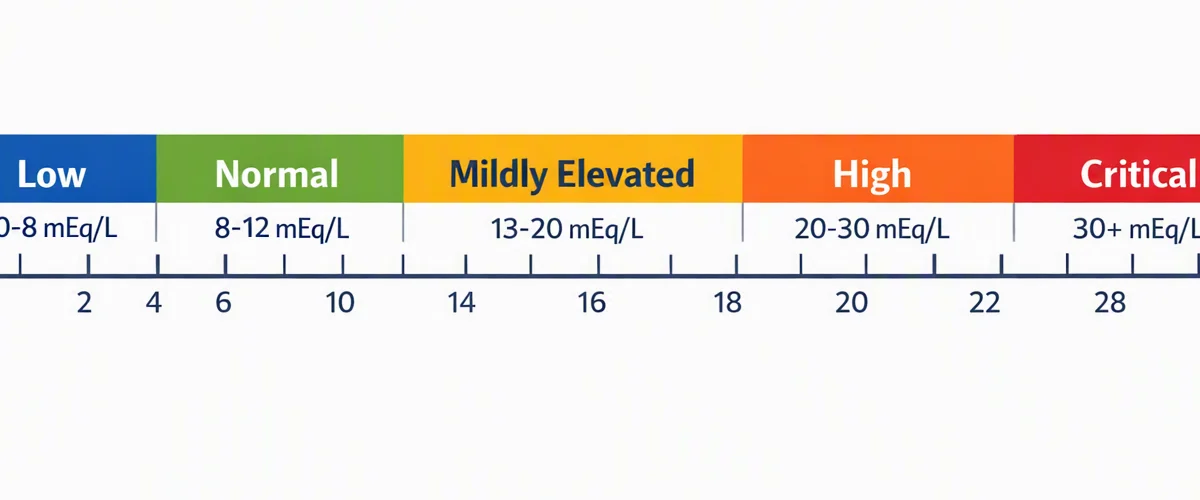
The normal range for the anion gap depends on the laboratory and the measurement method used. There is no single standard reference range, which is why clinicians read the result in context rather than relying on one fixed cutoff.
Many labs report a normal anion gap in a range that is close to the low teens, but the exact value can vary with assay differences and laboratory variation. Because of that, it is best to compare the test result with the specific reference interval shown on the blood test report.
Albumin also matters. Since albumin is an unmeasured anion, low albumin can decrease the apparent gap and make a high-gap problem more likely to be overlooked. That is one reason a result should always be interpreted using both the numeric value and the surrounding clinical context.
If the value sits near the upper end of the normal reference range, it may still deserve attention in a patient with symptoms or other lab abnormalities. A borderline test result can provide a useful diagnostic clue even when it does not obviously exceed the range.
What a Raised Anion Gap Can Suggest
A high anion gap frequently points toward metabolic acidosis caused by the build-up of undetected acids in the blood. This finding is also called high gap acidosis, and it can be an useful signal that additional testing is needed.
Typical causes include lactic acidosis, ketoacidosis, and toxic alcohol ingestion. Each of these conditions changes the blood chemistry in a different way, but each can increase the anion gap by introducing acid or acid-like substances that are not directly counted in the standard panel.
A buildup of lactic acid may occur when tissues do not receive enough oxygen or when severe illness disrupts normal metabolism. Ketoacidosis can occur in uncontrolled diabetes, prolonged fasting, or other states of excess fat breakdown. Toxic alcohol ingestion is another serious cause that can create dangerous acid-base changes and requires urgent evaluation.
When the anion gap is elevated, the number alone does not reveal the cause. Instead, it acts as a diagnostic clue that prompts a broader review of symptoms, vital signs, medication history, and additional laboratory results. That is why the value is most useful as part of a structured clinical assessment.
Understanding a Normal Anion Gap
A normal or near-normal result does not rule out acid-base problems. In reality, normal anion gap acidosis can still reflect clinically significant disease. This pattern is often called non-anion gap metabolic acidosis and sometimes non-gap acidosis.
Typical causes include diarrhea, renal tubular acidosis, and hyperchloremia. In these situations, bicarbonate is reduced, but chloride rises to preserve electrical balance, so the calculated gap may fall within the normal reference range.
Diarrhea may cause bicarbonate loss from the gastrointestinal tract. Renal tubular acidosis affects the kidneys’ ability to handle acid or bicarbonate properly. Hyperchloremia, which means an elevated chloride level, may be part of the body’s compensation for bicarbonate loss or another underlying condition.
For that reason, a normal gap should not be read as “everything is fine.” It only suggests a different pattern of acid-base disorder. Thorough electrolyte review and assessment of the broader blood test results are still necessary.
Serum albumin Correction and Corrected Anion Gap
Correction for albumin is important because low albumin can make the reported gap look lower than it truly is. When low albumin is present, the raw number may miss the degree of unmeasured acids in the blood. In those cases, a corrected anion gap can give a more accurate estimate.
Serum albumin possesses a negative charge and accounts heavily to the body’s unmeasured anion pool. If albumin is depleted, the gap may decline even if an acid load is occurring. This is why many clinicians use an albumin-adjusted approach, especially when assessing unexplained acidosis.
The exact correction method can change by institution, but the principle is the same: revise the result based on the albumin level so the final value better reflects the patient’s actual acid-base status. This can avoid a missed diagnosis in someone whose laboratory test shows low protein levels.
Total protein may also put in context the result, although it is not used directly in the standard equation. Together with albumin, it can support a more thorough view of the patient’s biochemical state and improve the quality of lab interpretation.
How to Use the Anion Gap Calculator Safely
An anion gap calculator is a practical tool, but it should be used as part of thorough electrolyte interpretation. The value is only useful when you consider the clinical context, the patient’s signs, and the rest of the blood chemistry.
Before relying on the result, check that the inputs come from the matching electrolyte panel and that units are uniform. If the sodium, chloride, or bicarbonate values are old or mismatched, the calculated number may be misleading. Good lab interpretation depends on precise, up-to-date data.
It is also crucial to avoid overinterpreting a single test result. A normal result does not exclude serious illness, and an elevated result does not determine the cause by itself. The calculator is best understood as a assistive tool for medical disclaimer purposes: it can help shape thinking, but it does not replace professional judgment or formal diagnosis.
If the result suggests metabolic acidosis or some other concerning pattern, additional evaluation may be needed. That may include repeat labs, blood gas analysis, review of medications or toxins, and assessment for infection, kidney problems, or other underlying causes. In short, use the calculator as part of a more comprehensive clinical assessment, not as a stand-alone answer.
Frequently Asked Questions
What is the anion gap formula?
The standard anion gap formula is sodium minus the sum of chloride and bicarbonate: anion gap = sodium - (chloride + bicarbonate). This formula is the core of most calculator tools and is used to assist acid-base interpretation.
What is a normal anion gap value?
A normal anion gap value depends on the lab’s reference range and measurement method. Many laboratories report a normal range in the low teens, but laboratory variation is typical, so the report’s listed interval should be used for interpretation.
How do you work out the anion gap from sodium, chloride, and bicarbonate?
To help you calculate the anion gap, sum chloride and bicarbonate together, then subtract that total from sodium. As an example, if sodium is 140 mEq/L, chloride is 104 mEq/L, and bicarbonate is 24 mEq/L, the result is 12 mEq/L. An anion gap calculator calculates it automatically.
Why does low albumin affect the anion gap?
Albumin is a major unmeasured anion in the blood. When hypoalbuminemia is present, the measured gap may look lower than expected, which is why albumin correction is sometimes needed. A corrected anion gap gives a better estimate of the real acid-base picture.
What can cause a high anion gap?
A high anion gap is often associated with metabolic acidosis from conditions such as lactic acidosis, ketoacidosis, and toxic alcohol ingestion. These causes increase unmeasured acids in the blood and can indicate a serious problem that needs prompt evaluation.