How the Anion Gap Measures in Suspected Poisoning
This anion gap is a valuable clinical indicator in the evaluation of acid base balance, especially when a toxic ingestion is considered. It helps doctors identify unexplained metabolic acidosis by reviewing the main measured electrolytes in a standard electrolyte panel. Practically, the anion gap is one of the fastest ways to recognize that something abnormal is developing in the blood chemistry before a full toxicology picture is available.
In the emergency setting, a widened anion gap can suggest a metabolic derangement caused by acid accumulation, impaired clearance, or exposure to a toxin. This is especially critical in suspected toxic alcohols, where early recognition can guide urgent treatment. An Anion Gap Calculator helps streamline lab interpretation by presenting the key values that support clinical assessment.
The anion gap is not a diagnosis by itself. It is a signal that must be interpreted alongside the patient’s symptoms, history, serum chemistry, and related tests such as serum osmolality, arterial blood gas, and other markers of organ stress. In suspected poisoning, it is best thought of as one element of a larger diagnostic puzzle rather than a standalone answer.
How Ethylene Glycol Poisoning Changes Lab Results
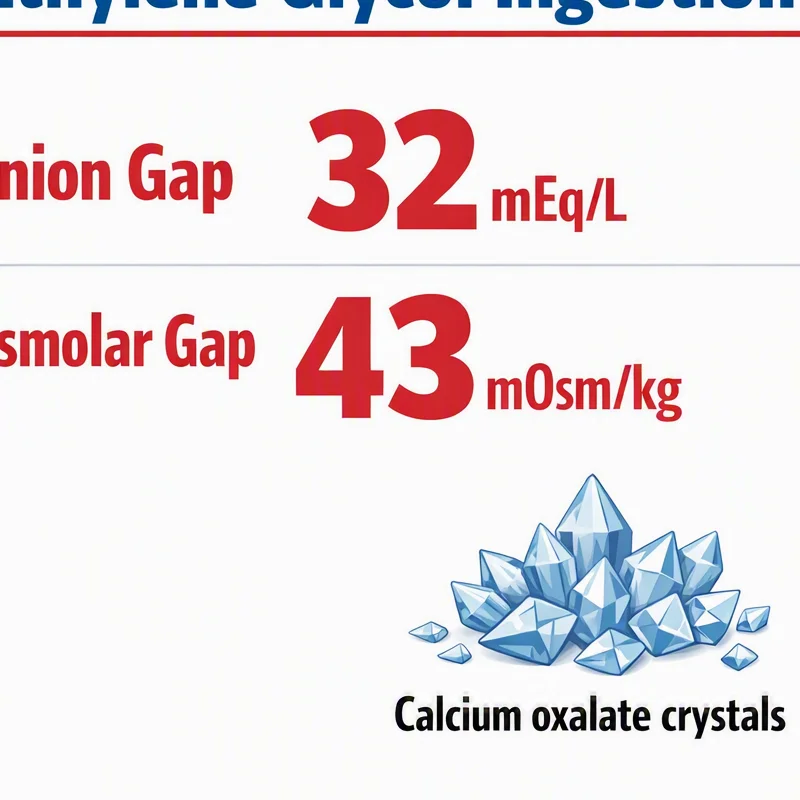
Ethylene glycol exposure is a well-known reason of ethylene glycol poisoning and can produce a serious set of laboratory findings. Early after ingestion, the main clue may be an elevated osmolar gap, reflecting the presence of unchanged parent compound in the blood. As metabolism advances, the parent alcohol is converted into glycolic acid and other acidic metabolites, which drive high anion gap changes and worsening metabolic acidosis.
This transition over time is a major reason why toxic alcohol ingestion can be missed. A patient may present with only limited symptoms initially, while the labs later evolve into a profound high anion gap metabolic acidosis. That is why timing of ingestion matters so much in laboratory interpretation. Early on, the osmolality profile may be more informative; later, the anion gap may become the more useful clue.
Ethylene glycol poisoning also impacts the kidneys and nervous system. Renal injury can arise as toxic metabolites and calcium oxalate deposition injure renal tissue. Neurologic symptoms may include confusion, incoordination, or declining mental status. In advanced cases, patients may also experience visual disturbances, though this feature is more classically associated with methanol. Still, the overall picture of toxic alcohol exposure requires careful clinical review because presentations often overlap.
Urine microscopy may reveal calcium oxalate crystals, which are consistent of ethylene glycol exposure when seen in the right context. However, these crystals are not required for diagnosis and should never delay treatment when suspicion is high. The overall pattern—osmolar gap at first, anion gap with time, worsening acid-base status, and organ injury—often provides the clearest clue.
How to Operate the Anion Gap Calculator
A Anion Gap Calculator draws on common serum values to determine whether unmeasured acids are present in the body. The calculation is based on the major cations and anions in the blood and is frequently applied to a serum bicarbonate-centered review.
The standard anion gap formula is:
Anion gap = sodium - (chloride + bicarbonate)
To calculate it, enter the patient’s sodium, chloride, and bicarbonate values from the serum chemistry panel. Some formulas include potassium, but the most common clinical form excludes it. A low bicarbonate value, when paired with an increased gap, often indicates the presence of metabolic acidosis due to unmeasured acids.
For instance, if sodium is 140, chloride is 100, and bicarbonate is 10, the anion gap is 30. That pattern indicates a substantial accumulation of acids and should prompt prompt evaluation for underlying causes such as toxic alcohol ingestion, lactic acidosis, diabetic ketoacidosis, or renal failure.
In suspected poisoning, the calculator should be paired with additional data points from the electrolyte panel and emergency evaluation. The anion gap is not isolated from the rest of the chemistry profile; it is most helpful when viewed together with measured osmolality, calculated osmolality, and the overall acid-base status.
Meaning: Normal, Elevated, and Severe Findings
Knowing the reference range for the anion gap is essential before making conclusions. Different laboratories may use slightly different reference intervals, but a typical normal result suggests that there is no major buildup of undetected acids. A normal value, however, does not always exclude poisoning, especially if the patient presents early after ingestion.
An elevated result indicates that unmeasured anions are accumulating, which is often seen in anion gap metabolic acidosis with a high gap. In suspected ethylene glycol poisoning, this is a important signal because glycolic acid and related metabolites can markedly increase the gap. The degree of elevation, combined with symptoms and other testing, helps determine urgency.
Interpretation in clinical practice should always include the broader acid-base imbalance. A patient may have respiratory compensation, mixed disorders, or coexisting processes that blur the interpretation. An arterial blood gas can help confirm the severity of acidemia and show whether the body is attempting to compensate. At the same time, a serum chemistry panel gives the numerical support needed to identify the gap itself.
A critical result is one that fits with significant poisoning, severe acidosis, or worsening organ dysfunction. In that setting, waiting for confirmatory testing may be unsafe. The calculator can support decision-making, but it should not replace urgent bedside judgment, especially when the clinical picture is strongly suggestive of toxic alcohol exposure.
Primary Differential Diagnoses and Confounders
HAGMA differential diagnosisVarious conditions can look similar to ethylene glycol poisoning and must be considered during clinical assessment. An important alternative is methanol poisoning, an additional toxic alcohol ingestion that can also lead to high anion gap metabolic acidosis and an osmolar gap early in the course. Methanol more commonly produces prominent visual symptoms, but overlap is frequent enough that both require prompt evaluation.
Diabetic ketoacidosis is another key confounder. It can produce a markedly elevated anion gap from ketone accumulation, along with dehydration, nausea, and altered mental status. In a patient with diabetes, this may be a more likely explanation, but it should not automatically rule out toxic alcohol exposure if the history is unclear.
Lactic acidosis can also raise the anion gap. Sepsis, hypoperfusion, seizures, or severe hypoxia may all lead to lactate accumulation and a similar metabolic picture. In these cases, the underlying cause is usually apparent from the broader clinical scenario, but the lab pattern can still resemble toxic ingestion.
Renal failure is a further key confounder because reduced acid clearance can create metabolic acidosis. Uremia may elevate the gap and complicate interpretation, especially if the patient already has abnormal baseline kidney function. This is why lab interpretation should always account for the full history, kidney status, and current illness severity.
Other considerations include mixed acid-base states, ketoacidosis from other causes, and laboratory error. Because multiple disorders can coexist, a single abnormal value should not end the evaluation. The most reliable approach is to integrate the calculator result with toxicology consultation, bedside findings, and confirmatory studies.
When to Escalate: Emergency Assessment and Management
Suspected cases of ethylene glycol poisoning is a medical emergency. If the pattern points to toxic alcohol exposure, urgent escalation is warranted, especially when there is increasing acidosis, altered mental status, or evidence of kidney injury. Early involvement of toxicology and poison control can help inform the next steps swiftly.
Fomepizole is a key antidotal therapy because it blocks alcohol dehydrogenase and delays the conversion of ethylene glycol into harmful metabolites. This can limit the buildup of glycolic acid and decrease further metabolic damage. In many cases, treatment is started before confirmatory levels return if the clinical suspicion is high.
Hemodialysis may be needed for severe poisoning, significant metabolic acidosis, very high toxic alcohol burden, renal injury, or clinical deterioration. Dialysis helps eliminate the parent compound and metabolites while correcting acid-base abnormalities. It becomes especially crucial when the patient is critically ill or not improving with initial management.
Supportive care in emergency medicine may include airway protection, fluid resuscitation, correction of severe acidemia, and close monitoring of electrolytes and renal function. An arterial blood gas, serum chemistry, and serial serum osmolality measurements can help track response. The goal is to treat without delay, because delays can lead to worsening organ injury and poorer outcomes.
Limitations of the Calculator in Possible Poisoning
The Anion Gap Calculator is valuable, but it has meaningful restrictions in clinical use. One major limitation is the timing of ingestion. Early after exposure, the anion gap may still be normal because the poisonous metabolites have not yet accumulated. Subsequently, the osmolar gap may decrease as the parent alcohol is metabolized, even as the acidosis progresses.
Lab limitations also matter. Differences in assay methods, specimen handling, and reference intervals can affect results. In some cases, the patient’s true acid-base status may be more complex than the calculator suggests. An isolated number cannot reflect the full effect of mixed disorders or rapidly changing physiology.
A particularly important concern is the false normal anion gap. This can occur initially in poisoning, after treatment has begun, or when other electrolyte changes mask the widening gap. A normal calculator result therefore does not safely dismiss ethylene glycol poisoning if the history, symptoms, or osmolality data remain concerning.
For these reasons, clinical judgment remains vital. The calculator should assist, not replace, bedside reasoning. If the patient has poisoning symptoms, unexplained acidosis, or a suspicious ingestion history, treatment and toxicology consultation should proceed even if the gap is not clearly elevated yet.
FAQ
What indicates an elevated anion gap suggest in ethylene glycol poisoning?
An elevated anion gap typically indicates that undetected acids are gathering in the blood. In ethylene glycol poisoning, this commonly reflects accumulation of glycolic acid and related acidic metabolites, which cause high anion gap metabolic acidosis. The result backs up the diagnosis but should be interpreted with the rest of the clinical assessment and toxicology data.
Can ethylene glycol poisoning to have a normal anion gap?
It can. The anion gap can be normal early after ingestion, before toxic metabolites accumulate. It may also appear normal after partial treatment or if other factors alter the lab pattern. That is why a normal result does not rule out poisoning when the history, symptoms, or osmolality findings are concerning.
How does the osmolar gap differ from the anion gap?
The osmolar gap compares measured osmolality with calculated osmolality and helps detect unmeasured dissolved substances in the blood, especially early after toxic alcohol ingestion. The anion gap reflects unmeasured charged particles, usually acidic metabolites, and often becomes more prominent later. In ethylene glycol poisoning, the osmolar gap may be higher first, followed by a rising anion gap as metabolism continues.
At what point should fomepizole or hemodialysis be used?
Fomepizole should be considered when ethylene glycol poisoning is suspected strongly enough that waiting could be dangerous. Hemodialysis is considered when there is severe acidosis, significant renal injury, high toxic alcohol burden, or clinical deterioration. Both decisions are often made with toxicology input and based on the overall picture rather than a single lab value.
What other conditions can mimic ethylene glycol poisoning?
Important mimics include methanol poisoning, diabetic ketoacidosis, lactic acidosis, and renal failure. Each can produce metabolic acidosis and abnormal lab patterns that resemble toxic alcohol ingestion. Careful lab interpretation, arterial blood gas review, serum osmolality assessment, and clinical history help distinguish these conditions.
In presumed ethylene glycol poisoning, the Anion Gap Calculator is most useful when it is considered as part of a wider diagnostic workflow. The best approach combines the calculator, serum osmolality, arterial blood gas, electrolyte panel findings, and the patient’s evolving symptoms. Such an integrated approach boosts the chance of recognizing toxic alcohol ingestion early and beginning appropriate emergency treatment before lasting harm occurs.